Pages

Tuesday, September 24, 2013

Free post #3


      Hello again everyone!  Todays pot is another free one.  For this post I thought I would describe my favorite animal that I am very interested in working with in a future career.  I am very interested in working with marine mammals.  There are a lot of species of marine mammals but I thought I would provide a little more information about my favorite and why I would like to work with and protect them.
   
      My favorite marine mammal is the Beluga Whale.  I have been infatuated with them since I was very young.  I have always thought they were very cute and friendly.  The Beluga Whale is typically a smaller whale, about 14 to 15 feet, and has a life span of 30+ years.  They eat a diet of mostly many different types of fish and are mostly found in arctic and subarctic waters.  There is currently only a population of about 100,000 of these Belugas in the world.  They are currently protected by the Endangered Species Act and listed as near threatened on the IUCN Red list.
     Beluga whales are constantly put in danger because of us.  Their lives are often effected by our pollution, oil spills, and toxic waste.  I think that it is unfair of us to put these beautiful creatures in a position like this.  They have never done anything to hurt us and I believe it is our responsibility to protect them and make sure that they do not go extinct in the near future. I really hope to be able to work with them and an array of other marine mammals in the future, and hopefully correct many of the problems they are facing today.
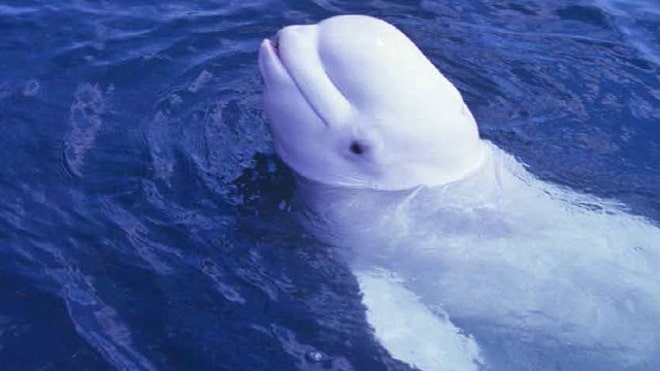


And because I love these creature, here is a fun song from my childhood that I loved!


Works Cited

"Fact Sheet Beluga Whales". Defenders of Wildlife, N.p., 2013. Web. 24 September 2013.

Pemmaraju, Uma. Photograph. google.com. Web. 24 September 2013.

prod. Baby Beluga. YouTube. YouTube, 15 July 2008. 24 September 2013   

Wednesday, September 18, 2013

9/19 Prompt: Professional Interview

     Todays blog post is about an interview I had with a perfessional in the field of zoology.  Professor Jan Stevenson was gracious enough to participate in the interview for me.  Professor Stevenson, although part of the zoology department, is involved more in environmental scientist.  He is actually conducting research on environmental conservation and how human activity alters algae and aquatic  ecosystems.  even though my research blog is geared toward the field of zoology, my actual major is environmental biology/zoology.  I really want to find a way to involve some sort of environmental conservation work in my future, so Professor Stevenson was a really good person to get to talk to to get a different perspective on the things I want to do.  Below are the questions I asked him and his main answer points (I was writing his answers while he was talking so these are not his direct quotes, but paraphrasing of his answers):

What kind of work have you done in the past? 
  • In the past, and now, I do research designed to help environmental problems.  I look at relationships between human activity and how we alter ecological systems.  I ask questions like, How do we want to manage ecological systems so we can manage our well being?  I also work with the EPA (Environmental Protection Agency) showing them haw to solve problems and look at ecology in different ways.    
What is your job like from day to day?
  • I work ten to twelve to even sixteen hours a day.  My job is largely compiled of writing, reading, and revising other work.  I also teach, about one class a year, hear at the university.
What is your favorite part of your job?
  • Writing helps us to think critically about information while trying to communicate.  During this process, you get new ideas and understandings.  This is the most rewarding and "fun" part of my job.  I get to understand what I didn't know before and gain new and cleaver ideas.  
What is the most challenging part? 
  • Trying to communicate effectively.  You have to see the big picture and major themes and make them clear; explaining them in a way people understand.  
What kind of training did you have to go through and what was it like?
  • I went through ten years of school: 4 years of under grad, 2 years for my masters, and 4 more years for my Ph. D.  I strongly recommend this path to my students to help them really figure out what they want to do.  I also had a lot of practical experience working with professors and graduate students.  This really changed how I did school and made me much more serious.  I feel that you really need to have both.
What have you written in the past/currently working on?
  • I have typically written data rich papers addressing specific hypothesis and journal articles.  I am currently reviewing and finishing a research paper on ecological assessments of algae, along with reviewing grad and Ph. D. students papers.   
What type of writing have you done and what was your favorite?
  • I write a lot of emails, scientific pieces, papers on analyzing data, journals, and I do a lot of reviewing.  I consider reviewing a form of writing.  It helps you learn, along with how to write and communicate.  Reviewing pieces are hard, but I enjoy that the most because it is the most rewarding.  You learn so much during the process of synthesizing information.  
What process do you use when writing?
  • I start by laying out the key points I want to make.  Then I do a stream of consciousness list of ideas I want to include with supporting key points and relating them.  Then I revisit the key points to make sure they are the same and are still included in my overall goal of what I'm writing.  I then organize my ideas into an outline in excel.  Next I find a block of time where I can do another stream of consciousness session where I do my draft quickly, without worrying about details or accuracy.  I then completely rewrite this (well not all the time but often) making sure it is written with clarity, accuracy, and completeness.  I then have someone who is not from my field, usually my wife, read and review it.  I like to do this because I like to make sure my writing is easily understandable for everyone.  I believe it is important to "write very simply" so that you can look at words and expect someone from another country to be able to understand it.  I also have someone from the same field review it.     
What are the challenges to communicating in your field?
  • There is so much information to keep up with.  Electronic availability helps with this.  There is also a systemic problem.  The scientific review process is a difficult one because you must rely of others to rigorously review scientific works and review the scientific methods and results of the people and pieces they are reviewing.  If not very reliable people are doing this reviewing then you have inadequate pieces being published.  It is time consuming to review but you should always review pieces like you would want yours reviewed.       
     It was very interesting to learn that a lot of the job of an environmental scientist is writing and reviewing.  Professor Stevenson's writing process actually had fairly similar components to ours in class.  He commented that reviewing is a form of writing and how he has to do it so often.  We are concentrating on the process of reviewing and editing in class at the moment.  How you must make sure your ideas are correct and what you want to get out to the audience, and making sure it is clear and understandable to all.  Professor Stevenson had a lot of good points about about writing and communication and he defiantly gave me a good idea of the types of writing I would have to do if I enter into this field.  Even though he is more environmentally based rather than zoology, both fields connect in many ways, and since I hope to combine the two in a career in the future, I will probably be doing some writing like this.

Works Cited

Stevenson, Jan. Personal interview. 18 September 2013.   

Sunday, September 15, 2013

Free Post #2


9/14/13

     Hey again everyone!!! So for this free post I decided to find some videos on You Tube about something that I am really interested in that relates to the field of zoology.  SeaWorld has something called the Rescue and rehabilitation Program where they rescue animals that are harmed by either environmental or man made factors.  Then they rehabilitate these animals until they are able to be released into the wild.  Below are the (short) videos that I found on You Tube that I were really interesting and informative:     

                                                                           
                                                                            and.....


                                                                            and.....

                                         http://www.youtube.com/watch?v=7gKsYjDOBS0

        So through these videos I was able to learn a little more about what it is exactly that the Rescue and Rehabilitation program does at SeaWorld and even got to see exactly how the process of rescuing and rehabilitating works on an animal such as the seal.  being able to do this through a video was pretty cool too because I feel like that is a lot more interesting and fun way to learn something.  I would really like to watch more videos like this to hopefully learn a little more about this program and I would really really love to be able to do some sort of internship at the SeaWorld in Orlando Florida with this program.

Works Cited:

SeaWorld Rescue and Rehabilitation, prod. SeaWorld San Diego Returns Elf the Harbor Seal to the    
Ocean. YouTube. YouTube. Web. 14 September 2013.

SeaWorld Rescue and rehabilitation, prod. Rescue and Rehab at SeaWorld San Diego. YouTube.    
YouTube. Web. 14 September 2013.

SeaWorld Rescue and Rehabilitation, prod. SeaWorld Orland's Animal Rescue and Rehabilitation Recap of 2012. YouTube. YouTube. Web. 14 September 2013.


Wednesday, September 11, 2013

9/12 Prompt: News vs. Professional writing

     Hey again everyone!  Welcome to week 2 of blog posting!  I think I'v finally gotten the hang of posting these things! yayyyy!  Anyways, todays blog is going to focus on the differences in writings between a news article and a scholarly article written by a professional in my field.  First I will give short summaries of the articles and then I will compare the style and delivery of them.

News article:
http://everydaylife.globalpost.com/marine-zoologist-5673.html
     So this article that I found on this online news source is actually really awesome!  Well according to me anyways :).  I really like this article because it is written about the exact field that I really want to explore!  This article is about the subfield in zoology called Marine zoology.  Since I wasn't sure anything like this existed, I am currently very excited!  Marine Zoologists study the lifestyle, behavior, and other things of that nature of animals in bodies of water.  The article also talks about the types of animals you can work with, the education needed, and even what the current job market is like.  I have always been interested in marine wildlife so the information supplied in this article is something that is really helpful for me.

Scholarly Article:
http://onlinelibrary.wiley.com/doi/10.1111/j.1469-7998.2007.00356.x/full
     This is the scholarly article that I read.  Its main purpose was to talk about how elephants are starting to destroy the natural plant life, reducing its richness and abundance because of their grazing and travel.  This article was not quite as interesting to me as the previous one because it is not exactly the type of work that I am interested in.  However, it works very well to compare to the news article.
   
     In comparing these two articles it is very obvious which one is the easier and more enjoyable read.  The news article was very simply written with few large words.  It gave easy descriptions about its topic of marine zoology and gave very useful information for someone looking into this field.  It was also delivered in a very easy to read way with large print size and easy to follow paragraphs.  The Scholarly article, on the other hand, was none of those things.  While it may hold the interest of those very invested into that issue, it was rather boring and dry to read.  It used large words and difficult sentence structure, making it hard to always understand and follow.  It was also delivered in a bit more of an inconvenient way.  The writing was small and the paragraphs did not have a lot of definition from one another.  Over all, I found the news article much more enjoyable to read and much more informative to me personally.


Works Cited:

Morgan, Scott. "What is a Marine Zoologist." Globalpost 2013, Demand Media ed.ProQuest.Web.11 Sept. 2013

Landman M., G.I.H. Kerley, D.S. Schoeman. "Relevance of elephant herbivory as a threat to Important Plants in the Addo Elephant National Park, South Africa." Journal of Zoology 474.1 (24 AUG 2007): 51-58.Web.10 Sept. 2013.


Sunday, September 8, 2013

Free Post #1: Questions Cont.

9/8/13

     Hey again!  So this post gets to be my first free post!  A free post will happen about once a week and can be about whatever I want in relation to my chosen field of zoology.  For this post I wanted to continue answering the questions I had about zoology, but this time using sources other than a book.  I'm hoping that this way I get much more specific and detailed answers to my questions and really start to learn the fundamentals of the field of zoology.  So just as a recap, here are the original 10 questions I asked:
      
      1.) What exactly is zoology?
      2.) Why is zoology studied?
      3.) How is zoology studied?
      4.) What is the minimum degree necessary to be a zoologist?
      5.) What is the zoology job market like?
      6.) What types of places and parts of the country are zoology jobs located?
      7.) What types of jobs do zoologists do?
      8.) What is the starting and average salary of zoologists?
      9.) What types of animals do zoologists study?
    10.) Can zoology be combined with environmental and animal conservation work?

Keeping in mind that I already answered the first 3 questions in my last post, I decided to go to the internet to try to find answers to the rest.  This was a much easier and informative way of getting my information. It was not nearly as difficult or stressful as having to find a book at the library that barely skimmed the surface of answering the questions I had.  This is what I was able to find:

      4.) What is the minimum degree necessary to be a zoologist?

    • The minimum degree necessary is a Bachelor's degree.  However, earning a Masters or Doctorate degree would be helpful in the competitive job market. 
      5.) What is the zoology job market like?

    • The zoology job market is very competitive.  There are not a lot of jobs offered in this field and even fewer good paying ones.
      6.) What types of places and parts of the country are zoology jobs located?

    • Some places that hire zoologists include: Federal and state agencies, universities, zoos, non-profit organizations, museums, environmental consulting firms, and hunting ranches.  Country locations really depend upon what type of zoology you go into.  I am very interested in doing something with marine animals so the best job locations would be by the coast.  The top 5 highest paying states for zoologists are Maryland, Connecticut, Massachusetts, Hawaii, and New Jersey.
      7.) What types of jobs do zoologists do?

    • Zoologists do many things when on the job.  A few consist of the following: Studying animals in their natural habitat, assessing effects of environment and industry on animals and their habitat, identify animal characteristics and classifications, writing reports/scientific articles/journals, making presentations for others interested in the field, organizing and conducting experiments with animals, overseeing care and distribution of zoo animals, coordinating the prevention and control of outbreaks of wildlife diseases, raising specimen for observation and experimentation, and collecting specimen to examine under microscope.  
      8.) What is the starting and average salary of zoologists?

    • A beginning salary of a zoologist is typically in the low to mid $30,000 range.  The mean pay of zoologists is around 61,880.
      9.) What types of animals do zoologists study?

    • Zoologists can work with many different types of animals, from things like lizards to large cats, it really just depends on what type of animal you are interested in studying.  
    10.) Can zoology be combined with environmental and animal conservation work?

    • Yes, many zoologists work to understand and preserve at risk populations of animals and work to maintain good environments for animals such as nature preserves and zoos.
After researching all of these questions I feel that I now have a pretty good idea as to what the field of zoology consists of and the circumstances surrounding jobs in that field.  The more I am researching the more I think that I can see myself having a future in this field.  It seems to have a lot of aspects that I find very interesting and a lot of choices and variety in jobs.  However, the competitive job market and low beginning pay are a concern for me and would be something I would have to consider very carefully if I were to pursue a career in this field.     


Work Cited:
Elsberry, Wesley R., and Diane J. Blackwood. "Interviews." Online Zoologists:. N.p., n.d. Web. 08
Hess, Kenneth. "Zoologist and Wildlife Biologist." Science Buddies. N.p., n.d. Web. 08 Sept. 2013.  
      <http://www.sciencebuddies.org/science-fair-projects/science- engineering-
      careers/Zoo_zoologistsandwildlifebiologists_c001.shtml>.
Imani, Faizah. "What Is the Standard Beginning Wage As a Zoologist?" Chron. N.p., n.d. Web. 08 


General Zoology Questions 9/5

9/8/13

     Hey everyone! So this is my first official blog post!  The purpose of this post is to ask just some general questions I have about my field of choice (zoology), then use a book (a real book) to try to answer as many of them as possible.  Below is the list of 10 questions that I have:

      1.) What exactly is zoology?
      2.) Why is zoology studied?
      3.) How is zoology studied?
      4.) What is the minimum degree necessary to be a zoologist?
      5.) What is the zoology job market like?
      6.) What types of places and parts of the country are zoology jobs located?
      7.) What types of jobs do zoologists do?
      8.) What is the starting and average salary of zoologists?
      9.) What types of animals do zoologists study?
    10.) Can zoology be combined with environmental and animal conservation work?

      So to help answer these questions I went to our MSU library and found a book called Zoology, by Malcolm S. Gordon, George A. Bartholomew, John D. O'Conner, and Everett C. Olson.  After my journey to the library to find this book, along with looking through all of the other ones there, I found that books really are not that helpful of a source of research.  To start with, actually looking for and finding a book is a fairly time consuming process, especially if you do not have an exact book you are looking for and the library is as big as this one.  Along with that, after looking through the book, I found that it really only answered a few of my questions.  Unlike the internet, books are a bit limited in being able to answer exact questions like I have formulated above.  I cannot just type my question into google and get an answer.  Almost all of the books I looked at were more of instructional and informational pieces about zoology topics, where as I was looking for something that was more about the actual career and opportunities of the field.  Below are the answers I was able to find with the book I chose:

     1.) What exactly is zoology?

    • Zoology is the study of the animal world in all its variety.  Zoologists try to understand how animals function and interact with the world around them. 

     2.) Why is zoology studied?

    • There are many reasons why it is studied.  A few may be: It is personally satisfying, It can sometimes lead to high paying jobs depending on what profession you choose within zoology, it is socially useful, it is important part of our cultural education and society, and it is an important part of understanding one's own self and the world around us.  

      3.) How is zoology studied?

    • the current study of zoology is broken up into 3 categories: Description of patterns, studies of mechanisms producing those patterns, and studies of the controls operating upon the mechanisms.  So basically zoologists observe, describe, analyze, and try to synthesize patterns, mechanisms, and controls in the animal world.
      As you can see, I was not able to answer very many of my questions with a book.  I think that for questions like mine, the internet or personal interviews may be a better source to get my information from.  Hopefully I will be able to get the rest of these questions answered with these resources so that I can get a good sense of what the field of zoology is all about and share it with all those that may be interested!

Work Cited:
   Gordon, Malcolm S., George A. Bartholomew, John D. O'Conner, and Everett C. Olson.Zoology.   
   New York: Macmillan, 1976. Print.