Pages

Thursday, November 14, 2013

Synthesis Post


          Writing this blog about my field of zoology has been a really great experience for me.  It has allowed me to dig deeper into a field that I find my self incredibly interested in and answer a lot of my questions that I originally had.  This blog not only answered my basic questions, like wage and job availabilities, but also made me push under the surface to find topics that really opened my eyes to what I could do with a field such as zoology.
            Because Zoology is such a large field, there are many different controversies that arise.  One of the most prominent controversies that I found while writing this blog is over ethics.  There is a lot of conflict over the ethical idea of keeping wild animals in captivity.  The insight that this blog has given me on this issue has really changed the way I look at some of the career choices in zoology.  As children, a lot of people have dreams of being whale trainers at SeaWorld or zookeepers, myself included.  After my research, I have realized that I am against organizations that sacrifice the well being of these animals for the entertainment of people.  I would really like to be apart of an organization that rescues the wild animals, rehabilitate them, and then returns them to their natural habitat.  I believe that it is important for humans and animals to coexist together, and when we harm them, it is our responsibility to rescue them. 
            The majority of the subfields in zoology work very hard for the animals of the world. Whether it’s through research, rescue, or just spreading awareness for those species endangered or in harms way, the field of zoology does so much for animals.  Zoologists have been working side by side with these animals to try and keep them alive and better their living conditions.  Organizations like the Rescue and Rehabilitation program at SeaWorld and the Dawn Saves Wildlife are all organizations working very hard to write human wrongs with these animals, and restore their living conditions.   Without zoologists, animals would not have the kind of awareness in society that they do today.  People are working really hard to try to help these animals and keep them around for a really long time. 
This blog has opened my eyes to all kinds of aspects of the zoology field, good and bad.  It has really forced me to think long and hard about how I want to play a part in this field.  Through posts like the Blackfish documentary, Dawn Saves Wildlife, and all of the ethics related ones; I have really been able to narrow down my beliefs about the zoology field and how I want to be apart of it. This field does so much not just for the animals of the world, but also the people with things like helping in advances such as agriculture and medicine.  It is important that people realize the impact that zoology has on the world and the positive differences it can make in the lives of animals and people.  The field of zoology is a very large field with a lot of different pathways that can be taken.  I hope that if I choose to continue with this field I will travel a path where I can be apart of the mission to help the animals around us and make the world a better place.

Monday, November 11, 2013

Free Post #10

     For todays free post I wanted to elaborate a little more on something that I discovered while doing my last post.  In my last post I found a short YouTube video about zoology staring a professional zoologist.  In the video he talks about how he used to train dolphins for the Navy.  I had never heard of something like this before and was very intrigued.  I was kind of worried that this might be something dangerous or scary for the dolphins.  I remember a while back hearing something about how in the olden days, they would strap bombs to dolphins and send them over to enemy ships to set them off.  You can imagine with this image in my head that I would be a little hesitant to look at this subject more.        However, I was to interested not to do a little research.  What  I stumbled upon turned out to be much more humane and very intriguing.
     I discovered that the US Navy actually has a Marine Mammal Program where they employ dolphins and sea lions for their diving and sensory capabilities.  With the seals good eye site and the dolphins echolocation, they are good at swimming through murky waters and finding things like sea mines and mark and retrieve items for divers.  At first  I was a little nervous when they said sea mines, the things that explode underwater to destroy ships, but it turns out that those are made with marine mammals in mind so dolphins are not harmed by them.  They are made to go off if they are hit by a large ship, not swaying from the water or from sea animals.  The site also debunked the rumor about dolphins being used by the Navy to harm or injure humans or carry weapons for that same perpous at any time in history.  the animals are never used for attack missions.  I was very happy to discover this.  The Navy is also held to the same standards as other facilities with marine mammals for the health and care of the animals.
      As cool as this is, and even though the animals must be treated humanly according to the law, is it really right to make these wild animals work like this for us? They are treated well and kept safe while on duty, but at the same time, these are wild animals.  They are doing a great service for us with the duties they perform.  It is not really a black and white issue; there are a lot of different things that must be taken into consideration.  It is really up to individuals the kind of opinion they have on  organizations such as this one.

Work Cited:

US Government. "Marine Mammal Program." US Navy Marine Mammal Program. US Navy, n.d. Web. 11 Nov. 2013.


Sunday, November 10, 2013

11/7 Post: Remixing Knowledge

     For todays post we were assigned to find a remix source dealing with our field.  I found a video online where a professional zoologist, Gary Wilson, talks about his experiences in the field and what zoology means and does for the animals.  Below is the video I found:


     The idea that is being focused on in this video is the job of a zoologist and the importance of animals in our world and for our ecosystem.  Gary's video presentation is arranged in a way that is easy to follow; first explaining his interest and experiences with animals then leading to the jobs of a zoologist and how doing those jobs expresses the importance of animals.  In his video, he is trying to revise peoples idea about the importance of zoology as a field and just animals in general.  He makes sure to explain that animals are a very important part of our ecosystem, and in turn, us.  He obviously believes that it is important for people to help out these animals and is trying to convince the viewers so.  The style of this piece makes it very easy to comprehend.  Gary uses simple language and refrains from using big words.  He also keeps his sentence structures easily understandable and not at all confusing.  His style helps him to easily relate to the viewers because Gary uses language that is used in everyones everyday vocabulary making it easily understandable.  The delivery style of this piece also makes it more relatable and personal to the audience.  As a video, it makes it a more popular viewing utility and just more pleasant over all to observe.  The internet, and videos, are a much more popular type of delivery method in this day and age and is much more responded to than things like books or articles. 
     Over all I think that Gary's video is a very successful one on the RAIDS scale.  It is easily comprehendible while still being interesting, and getting his point across.  This video does a very good job of providing an easy concise summery of the zoology field, and expressing the importance of animals in our society. 

Work Cited:

Zoo Animals: About Zoologists. YouTube. eHow, 7 Jul. 2009. Web. 10 Nov. 2013.     

Friday, November 8, 2013

Free Post #9

     For todays free post I didn't really have an idea of what to write about.  I decided to ask a few people about if they had any questions about the field of zoology.  One of the questions I got was what they do with the animals at the zoo in the winter time.  I found this question really interesting because I have never really thought about it before.  I know that zoos still stay open in the winter but what do they do with the animals like giraffes and lions that come from places like Africa wehre it is warm year round?  I decided to do some research.
     It turns out that while zoos do stay open till the winter, they make the habitats for the animals as close to their natural habitats as possible.  Animals like the bears and polar bears that are accustom to the cold temperatures can live just fine, but animals like lions and wild dogs have heated rocks and caves to lay in/on.  One of the biggest concerns is the giraffes, "giraffes are not adaptable" (Where Do the Zoo Animals go for the Winter?).  animals like giraffes are brought to stay inside for the winter.  For these animals it is important to make sure they are receiving the same amount of care as they had when they lived in their enclosures outside.  They must receive exercise by moving and keeping their minds bright by doing puzzles (Bowerman)!  These animals must be kept happy in order to continue to survive in captivity.
     It is good that zoos take into account the natural climates of the animals to try to make their zoo life as close to home as possible.  However, I still feel that there is truly nothing like the real deal for these animals and they should be left to thrive in the wild where they belong.    

Works Cited:

"Where Do the Zoo Animals go for the Winter?" CBSBoston. N.p. 1 Oct. 2010. Web. 8 Nov. 2013.

Bowerman, Todd. "What do Cold Cities Do With Zoo Animals in the Winter?" Animals by Demand Media. Pawnation. n.d. Web. 8 Nov. 2013.

10/24 Post: Practicing Your Knowledge (Hands on Activity)

     Todays post was a little challenging.  We were given the assignment to participate in a hands on activity  related to our field.  This proved to be especially difficult for me, as I have been focusing my blog on marine mammals.  Living in Michigan, it is pretty uncommon to see whales and other marine animals outside of places like zoos and such.  I had to remind myself that the field of zoology doesn't just deal with marine mammals, it encompasses all animals and the study for them and their lives and habitats.  So I decided to step outside of the usual animals I have been talking about, but still pick one that interested me.  Along with marine mammals and wildlife, horses have always held a large interest for me.  I took riding lessons as a child and my mom owned horses for most of her life, including the beginning of mine. A few months back, my mom heard of a new baby horses that had just been born at her old barn, Pine Meadows.  So I went home over the weekend and my mom took me up to the barn so I could observe the baby horse and the interactions between use and the mom and the baby.
     My first observation was that the baby horse was sooooo cute!!  it was really fun to see how interested it was in its surroundings because everything was so new to it.  it would run over to the people and its trainers, or explore different patches of grass then run back over to its mom for a little.  It was interesting to see how open the baby was to new things and how friendly it was.  A lot of times older horses will ignore you and just go about their business, but the baby was very interested in its surrounding.
     It was also very interesting to realize how alike these creatures are to humans.  Just like the baby horse, human babies are also very  are fascinated by what is around them and they like to explore, but still keep a close relationship with their mother.  It really just drives home the idea of how much animals are like us and how we need to learn to share the planet with them.
     research and observation is a very big part of the field of zoology.  Having this skill and using it are very important aspects of the job.  In the future, I hope to do some research with marine mammals and their lives under the sea because I realize how important this is, but I don't want that to be all I do.  I would really like a chance to interact with these animals and develop some up close and personal observations about them.      

Sunday, October 27, 2013

Free Post #8

     For todays free post I thought I would look into a little more about what my last post was about.  I wanted to look into the lives and stories of orca whales in captivity.  These huge creatures are often used in exhibits like SeaWorld for entertainment purposes.  In the documentary that I found, called Blackfish, it brings attention to some of the negatives of keeping animals like orcas in captivity.  The documentary stressed the idea that keeping animals like this in captivity can lead to serious frustration and aggressiveness from these creatures, leading to all of the attacks on trainers that were highlighted in the film.  This documentary shows many of the previously unclear orca attacks on humans.  It also features many interviews from people who were previously whale trainers, and scientists who have opinions on the reasons behind the attacks and emotions of these whales.  Below is the trailer to the documentary film:
 

     After watching this film, I was in a bit of shock.  I had always heard that keeping animals in captivity was a bad thing, but this documentary really opened my eyes to how bad it truly is.  It is important to keep in mind that this is a movie most likely overdramatized for viewer purposes.  however, these events and attacks told in the documentary did actually happen and there was a reason for them.  This is a very complicated and intense subject with many different sides and opinions to it.  When all the evidence is put together, it is easy to see why many think programs such as SeaWorld should be discontinues.  A topic with evidence and stories like this really makes you think about the morals of actions like these, and what the human race is really capable of doing to other living species.  I know I am putting some serious thought into this topic after seeing a documentary like this one.
     I did also want to make it clear that by going into the field of Zoology, this is not the kind of thing I condone.  Even though this is the kind of things that got me interested in marine mammals as a child ( I mean who didn't love Shamu as a kid), now I am more interested in the rescue and rehabilitation, along with the release, of these types of animals.  I do not believe it is right to keep a wild animal that is otherwise perfectly healthy, in captivity for its entire lifespan.  I believe that everything on the earth has the right to a free life.

Work Cited:

Magnolia Pictures, prod. Blackfish Official Trailer. YouTube, Jul. 2013. Web. 27 Oct. 2013.  

Thursday, October 24, 2013

10/31 Post: Recognizing Significance (switched with 10/17)

     For todays post  I ended up having to switch a few around.  Instead of doing the post about a hands on experience, I will be doing the one about the importance of the Zoology field and the kind of things it has done for us.  
     The field of zoology has done some really amazing things for the world and us.  It has been especially helpful in medical and agricultural issues.  Zoology has helped with things such as new organ transplant techniques, to fighting against the war of yellow fever by studying the misquotes that have it, in the past. There is an even brighter future ahead because of what the field of zoology has been able to do for us.  Currently, zoologists are helping with the fight against cancer, countless other medical diseases, and genetics issues.  They have been able to help the commercial fishing industry with harvesting without destroying resources and even increasing crop producing.  
     It is very obvious that the field of zoology is very important to not only animals but also humans.  This field is often underestimated and overlooked as one that is not very important and only really concentrates on animals.  Everyday the members of this field are learning new things that are changing the lives of animals and humans.

Work Cited:

Interesting Facts About Zoologists. Bubblews, 20 Mar. 2013. Web. 24 Oct. 2013.

Wednesday, October 23, 2013

Free Post #7

     For todays free post I wanted to talk, and bring notice, to something that I have been hearing about more and more lately.  I actually stumbled upon this while looking for "cool facts about zoology" on google to get ideas about other free posts, and I think that I did find something really cool.  For the last few years, Dawn, the dish soap, has become well know for collaborating with the Marine Mammal Center and the International Bird Rescue to help rehabilitate animal that are effected by the humans impact on the environment, specifically oil spills.  It was discovered a little while back that dawn soap is actually one of the only substances that can effectively remove oil covering animals without doing further damage.  I think it is so incredibly cool that something so ordinary can actually save the lives of hundreds of animals a year!!  Dawn and these organizations realize the importance of these animals on the environment, and just in life in general.  I also think it is so good of them to do the educating that thy do because they know how important it is to teach the young kids of the generation that they are responsible for these creatures and the success of the environment in the future.  Dawn is also making a series of short documentaries showcasing the work they have done and all of the incredible animal rescues that have been accomplished.  Over all, I think that what Dawn is doing is really incredible.  For more information on what they are doing, ways you can help, and to see the documentaries,  go to www.dawnsaveswildlife.com.

     Below is a one of the documentary episodes that does a really good job expressing the beliefs and accomplishments:

Work Cited: 

Dawn Saves Wildlife. Dawn 2013. Web. 23 Oct. 2013.


10/17 Post: Contemplating Controversy

     For todays blog I am going to talk about both sides of a controversy that is commonly brought up about animals in zoo like facilities and aquariums.  In the Pasadena Weekly online news site, this issue is focussed specifically on the captive orcas at Sea World.  Many believe that it is wrong for places such as Sea World to keep these animals captive.  They feel that their refined living spaces and unnatural lives are a hinderance to their proper physical and mental growth.  Many people are also appalled by some of the capturing techniques supposedly used to take young whales from their home to put them into captivity.  Animals treated like this are often believed to develop psychological issues, possibly leading to the recent orca attacks on the animal trainers.  Overall, this side of the issue has a serious issue with the way they feel that these marine animals are forced to live.  From their small unnatural habitats, to being forced to learn confusing routines for tourist show purposes, many think that whales in captivity is wrong.
     On the other side of the argument, from those who support institutions like Sea World, they feel that people do not know the true facts of what goes on with the animals and their life styles.  Sea World is one of the worlds most respected zoological institutions.  They feel that many people quickly judge such a complicated matter, and base their opinions from things like the film industries views of such institutions.  They also feel that the fact that they rescue, rehabilitate, and return to the wild hundreds of animals a year.
     This issue is a very common controversy in all aspects of contained animals.  there will always be those that argue both ways.  Hopefully, some time in the future, the zoology community will be able to come to a happy medium between people and animal happiness.


Work Cited

Monji, Jana. "Swimming in Controversy." Pasadena Weekly. 25 Jul. 2013. 23 Oct. 2013.


Sunday, October 13, 2013

Free Post #6

     For todays free post I thought I would talk a little about how I did some exploring on the online library resource.  Last week, instead of meeting in the usual spot for my WRA 150 class, we went to the library and got a lesson on how great of a resource the library can be, the physical building and online.  I am very glad  that we learned about this resource because it gives great access to very reliable sources.  It is also really easy to use.  You just choose they type of resource you want to find, a book, or scholarly article or journal, and then put in a few key words of the kind of things you would like to get information on.  Another really cool aspect of using the online library resource is that they have the citations right there, so you don't have to formulate those on your own ( the worst part of any research project!).
    Just to test this resource and how easy it is, I went online to the MSU library, decided that I wanted to find some articles with information on the field and events of marine mammal zoology.  So I put in my information and I automatically got over 190,000 results!  If I had been looking for any information in particular I would have had to search through the titles for a little before I got what I wanted, but because I was just doing an experiment, I just looked at the first few.  They were all interesting articles about programs with marine mammals that might be good information for future posts!!!  I hope to be able to use this process again with future posts and even other assignments because it is so easy and convenient to use, and hopefully I will be able to learn even more about it as I go to make it even easier to use!


Friday, October 11, 2013

10/10 Post: Evaluation Sources

     For todays post I found a Journal that talks about the conservation of polar bears in Canada.  I know that so far my blog has been more focused on marine mammals because that is what I am really interested in working with in the future, but the field of zoology encompasses all animals.  the conservation of animals is a really important part of zoology, especially if that animal is on its way to extinction like the polar bear is thought to be.
     The main idea and argument of this article is that the conservation path for polar bears in Canada (where a great number of the worlds polar bears reside) needs to be redirected from focusing mostly on harvest management (the hunting of polar bears) to the effects of climate change.  It is shown scientifically that the polar bears habitat is starting to decrease as the sea ice is melting, which will eventually lead to the decrease of polar bears themselves.
     I believe that since conservation of animal species is such an important part of zoology, and just life itself, that it is important for Canada to work really hard, and revaluate the necessary acts it will take to help their species thrive again.  With this said, I think that it is a good idea for them to consider how the polar bears loss of habitat is affecting their population, but they should not totally discard harvest management.  If they do not control hunting on polar bears, it will not matter if they work on the conservation of their habitats, they will be hunted to death.  I believe that they need to find a way to combine these 2 issues the polar bears face if they want them to have success in increasing their population again.  Hunting of these creatures needs to be band and work for conserving their land needs to begin.

Work Cited:

Peacock, B. "conservation and Management of Canada's Polar Bear (Ursus maritimus) in a changing Arctic" Canadian Journal of Zoology 89.5 (2011): n. pag. Web. 11 Oct. 2012.
      

Tuesday, October 8, 2013

Free Post #5

     So for todays free post I thought I would do some research on some of the the types of jobs a zoologist can do and the estimated amount that they make in those jobs.  This topic is one of the most challenging to accept as a zoologist major.  The reality of the field is that in order to get a good job you have to go through a lot of schooling, and unless you are near the top 10% of zoologists or make it into the film industry some way, you do not make all that much money.  I know that money should not be a deciding factor as it is not the most important factor in choosing a career, but it is a factor none the less.
     One type of job that is common for a zoologist to have is a zoo curator.  This job consists of working at zoos caring for the health and welfare of the animals there.  The annual salary of a zoo curator is between $42,328 and $56,700.  Another job would be a marine mammal trainer.  These trainers work in zoos, aquariums, marine reserves, and game parks where they look after the welfare of species such as dolphins, whales, walruses, and sea lions.  Members of this profession make from $33,650 to $93,600 if they are able to make it int the film industry, which is very challenging.  Conservation is another type of job in this field where a lot of time is spent in the field collecting and researching habitats of threatened species.  this type of job can make between 52,180 and 70,590 annually.  One last type of job that a zoologist can do is wildlife rehabilitation.  In this profession people provide care to orphaned, injured, or sick wildlife and then return them back to the wild when they are ready.  The annual salary of this profession varies greatly but for the typical worker, it is pretty low, often a volunteer position. 
     There are many other types of jobs that a zoologist can get into.  These are just a few of the main types that someone in this field can get.  This information really just emphasized what I already know about this field, it just gave me some specific job ideas which was nice.  However like I said before, unless you are in the top percentage of zoologists, you do not make all that much money.  I was able to learn this information on the internet from a reliable news site.  This new information has me really thinking about this field and if it something I should enter into.  With something that requires so much schooling, likely between 8 and 10 years to acquire a decent job, and doesn't have such a profitable ending, it is a profession that I would have to be in love with.  I have a lot of thinking to do about it and will hopefully be able to make some sort of decision soon!

Wirk Cited:

Kielmas, Maria. What Jobs Could a Zoologist Get?. Chron Demand Media. Web. 7 October 2013.

Sunday, October 6, 2013

10/3 Post: Defining Ethics

     Todays post is about the ethics in the community of my field.  Unfortunately, in the field of zoology, along with a lot of fields in sciences, there is no written or formal set of ethics to be followed.  Each scientist is kind of responsible for judging for themselves, along with a combination of morals and public guidance, whether their actions would be considered ethical, and follow those guidelines throughout the rest of their work.
    Although there are not solid guidelines for zoologists to follow, some common ethical questions in the zoology field relate the treatment of animals and scientific research and testing of them.  Many of the animals of zoology are caged or captured animals that are either being trained, rehabilitated, used for research, or for community entertainment purposes such as zoo's.  It is very important that all of the animals are treated with respect and are living in good conditions suitable for their species.  When the animals are involved in research, it should never be something that is physically or mentally harmful and should be for a good purpose.  The animals should always be treated with great care no matter where they are or what they are being used for.
     These beliefs are very much like my own when it comes to animals.  I feel that animals should be treated with the utmost respect.  We share the world with the animals and I think that it is important for people to realize that they have as much a right to life as we do.  I also believe that we have a responsibility to help those animals which were harmed because of us.
     In college, I plan on doing many things that will prepare me for a possible career in zoology while following the guidelines above.  The first thing is getting an overall degree in it so I am able to get a good job and learn all I can about the field and the important aspects of it.  I will also do some sort of research dealing with animals here so that I can learn the proper way to do it and keep the animal safe.  A third thing would be participation and finishing this blog because it has taught me so much about this field and the important ways of helping animals.

Works Cited:

Buckeridge, J. "Ethics and Zoology."Acta Zoologica Sinica (2004): vol. 50, n. 5, pag. Abstract. Web.  7 Oct. 2013     

Thursday, October 3, 2013

Free Post #4

     For todays free post I wanted to talk about an internship that I found that I would really like to participate in over the summer.  The Internship is through the Institution for Marine Mammal Studies (IMMS) and is a marine mammal and sea turtle stranded response internship.  This internship incorporates rescue and rehabilitation opportunities along with chances to participate in research, education and animal care of marine mammals and sea turtles.  I was very excited to learn about this internship because it is the exact kind of job I would like to do in the future and it would be an incredible opportunity.
     While this internship sounds like a lot of fun, it also sounds like it is very intense.  The requirements include being available Monday through Fridays, holidays, and weekends, working around 40 hours a week.  Unfortunately, It is an unpaid internship, but because it would be such an incredible experience, I believe that all of this is worth it.  
     I learned about this internship through email and a bit of research from that email.  From the description of this internship, I learned that the position I want to have in my field, and getting there, will be a lot of work but will be worth it in the end!        
I am very excited to have been introduced to such an opportunity and will begin the application process very soon!  Wish me luck!      

Tuesday, October 1, 2013

9/26 Post: Observing Community

Hey again everyone!  todays post is supposed to be about a club on the MSU campus related to our field.  I would have liked to attended the Zoology Student Association club but unfortunately, I had a prior commitment.  So instead, I interviewed Morgan Herlevi, the secretary of the club over email.  She was very helpful in doing this interview for me, and it was very greatly appreciated.  Bellow are the questions I asked Morgan, along with her answers:

1) What is the purpose of the ZSA club?
  • Our formal mission statement is along the lines of bringing students in zoology closer together and help them access internships and jobs with the speakers and professors we bring in.
2) What kinds of major things do you guys focus on in meetings?
  • We generally talk about any events that we having going on and any general club business and then we have the speaker for that day talk for the rest of the meeting. 
3) What are the beliefs and values of the club?
  • Um, I don't think we really have an defined ones. We believe in trying to get people to come together and we value having active members. 
4) What kinds of communications must be performed in the club? Like are there a lot of emails, or writing, or contacting of professionals, and how do you go about doing this?

  • We mostly just inform everyone of events at the meetings and then send out emails and use the facebook group to remind people. E-Board both calls and emails people about coming in to speak.

5) What are your favorite parts of the ZSA club?
  • My favorite parts are being able to hang out with all the other zoology nerds since we are all weird. I also really like the live animal presentations we have.
      After doing this interview it is easy to see that this club is all about the members.  They are very into the unity of the group and ways that they can help their members.  I really wish that I would be able to attend these meeting and be apart of this club.  Having professionals speak and getting to interact with animals would be some really good opportunities.  I hope to be able to be apart of some of these meetings n the future.

Works Cited:

Herlevi, Morgan. "Re: Possible Interview For a Student." 9 September 2013. E-mail.


Tuesday, September 24, 2013

Free post #3


      Hello again everyone!  Todays pot is another free one.  For this post I thought I would describe my favorite animal that I am very interested in working with in a future career.  I am very interested in working with marine mammals.  There are a lot of species of marine mammals but I thought I would provide a little more information about my favorite and why I would like to work with and protect them.
   
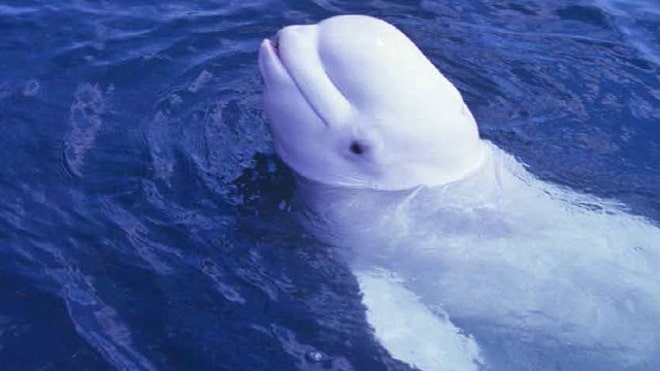
      My favorite marine mammal is the Beluga Whale.  I have been infatuated with them since I was very young.  I have always thought they were very cute and friendly.  The Beluga Whale is typically a smaller whale, about 14 to 15 feet, and has a life span of 30+ years.  They eat a diet of mostly many different types of fish and are mostly found in arctic and subarctic waters.  There is currently only a population of about 100,000 of these Belugas in the world.  They are currently protected by the Endangered Species Act and listed as near threatened on the IUCN Red list.
     Beluga whales are constantly put in danger because of us.  Their lives are often effected by our pollution, oil spills, and toxic waste.  I think that it is unfair of us to put these beautiful creatures in a position like this.  They have never done anything to hurt us and I believe it is our responsibility to protect them and make sure that they do not go extinct in the near future. I really hope to be able to work with them and an array of other marine mammals in the future, and hopefully correct many of the problems they are facing today.


And because I love these creature, here is a fun song from my childhood that I loved!


Works Cited

"Fact Sheet Beluga Whales". Defenders of Wildlife, N.p., 2013. Web. 24 September 2013.

Pemmaraju, Uma. Photograph. google.com. Web. 24 September 2013.

prod. Baby Beluga. YouTube. YouTube, 15 July 2008. 24 September 2013   

Wednesday, September 18, 2013

9/19 Prompt: Professional Interview

     Todays blog post is about an interview I had with a perfessional in the field of zoology.  Professor Jan Stevenson was gracious enough to participate in the interview for me.  Professor Stevenson, although part of the zoology department, is involved more in environmental scientist.  He is actually conducting research on environmental conservation and how human activity alters algae and aquatic  ecosystems.  even though my research blog is geared toward the field of zoology, my actual major is environmental biology/zoology.  I really want to find a way to involve some sort of environmental conservation work in my future, so Professor Stevenson was a really good person to get to talk to to get a different perspective on the things I want to do.  Below are the questions I asked him and his main answer points (I was writing his answers while he was talking so these are not his direct quotes, but paraphrasing of his answers):

What kind of work have you done in the past? 
  • In the past, and now, I do research designed to help environmental problems.  I look at relationships between human activity and how we alter ecological systems.  I ask questions like, How do we want to manage ecological systems so we can manage our well being?  I also work with the EPA (Environmental Protection Agency) showing them haw to solve problems and look at ecology in different ways.    
What is your job like from day to day?
  • I work ten to twelve to even sixteen hours a day.  My job is largely compiled of writing, reading, and revising other work.  I also teach, about one class a year, hear at the university.
What is your favorite part of your job?
  • Writing helps us to think critically about information while trying to communicate.  During this process, you get new ideas and understandings.  This is the most rewarding and "fun" part of my job.  I get to understand what I didn't know before and gain new and cleaver ideas.  
What is the most challenging part? 
  • Trying to communicate effectively.  You have to see the big picture and major themes and make them clear; explaining them in a way people understand.  
What kind of training did you have to go through and what was it like?
  • I went through ten years of school: 4 years of under grad, 2 years for my masters, and 4 more years for my Ph. D.  I strongly recommend this path to my students to help them really figure out what they want to do.  I also had a lot of practical experience working with professors and graduate students.  This really changed how I did school and made me much more serious.  I feel that you really need to have both.
What have you written in the past/currently working on?
  • I have typically written data rich papers addressing specific hypothesis and journal articles.  I am currently reviewing and finishing a research paper on ecological assessments of algae, along with reviewing grad and Ph. D. students papers.   
What type of writing have you done and what was your favorite?
  • I write a lot of emails, scientific pieces, papers on analyzing data, journals, and I do a lot of reviewing.  I consider reviewing a form of writing.  It helps you learn, along with how to write and communicate.  Reviewing pieces are hard, but I enjoy that the most because it is the most rewarding.  You learn so much during the process of synthesizing information.  
What process do you use when writing?
  • I start by laying out the key points I want to make.  Then I do a stream of consciousness list of ideas I want to include with supporting key points and relating them.  Then I revisit the key points to make sure they are the same and are still included in my overall goal of what I'm writing.  I then organize my ideas into an outline in excel.  Next I find a block of time where I can do another stream of consciousness session where I do my draft quickly, without worrying about details or accuracy.  I then completely rewrite this (well not all the time but often) making sure it is written with clarity, accuracy, and completeness.  I then have someone who is not from my field, usually my wife, read and review it.  I like to do this because I like to make sure my writing is easily understandable for everyone.  I believe it is important to "write very simply" so that you can look at words and expect someone from another country to be able to understand it.  I also have someone from the same field review it.     
What are the challenges to communicating in your field?
  • There is so much information to keep up with.  Electronic availability helps with this.  There is also a systemic problem.  The scientific review process is a difficult one because you must rely of others to rigorously review scientific works and review the scientific methods and results of the people and pieces they are reviewing.  If not very reliable people are doing this reviewing then you have inadequate pieces being published.  It is time consuming to review but you should always review pieces like you would want yours reviewed.       
     It was very interesting to learn that a lot of the job of an environmental scientist is writing and reviewing.  Professor Stevenson's writing process actually had fairly similar components to ours in class.  He commented that reviewing is a form of writing and how he has to do it so often.  We are concentrating on the process of reviewing and editing in class at the moment.  How you must make sure your ideas are correct and what you want to get out to the audience, and making sure it is clear and understandable to all.  Professor Stevenson had a lot of good points about about writing and communication and he defiantly gave me a good idea of the types of writing I would have to do if I enter into this field.  Even though he is more environmentally based rather than zoology, both fields connect in many ways, and since I hope to combine the two in a career in the future, I will probably be doing some writing like this.

Works Cited

Stevenson, Jan. Personal interview. 18 September 2013.   

Sunday, September 15, 2013

Free Post #2


9/14/13

     Hey again everyone!!! So for this free post I decided to find some videos on You Tube about something that I am really interested in that relates to the field of zoology.  SeaWorld has something called the Rescue and rehabilitation Program where they rescue animals that are harmed by either environmental or man made factors.  Then they rehabilitate these animals until they are able to be released into the wild.  Below are the (short) videos that I found on You Tube that I were really interesting and informative:     

                                                                           
                                                                            and.....


                                                                            and.....

                                         http://www.youtube.com/watch?v=7gKsYjDOBS0

        So through these videos I was able to learn a little more about what it is exactly that the Rescue and Rehabilitation program does at SeaWorld and even got to see exactly how the process of rescuing and rehabilitating works on an animal such as the seal.  being able to do this through a video was pretty cool too because I feel like that is a lot more interesting and fun way to learn something.  I would really like to watch more videos like this to hopefully learn a little more about this program and I would really really love to be able to do some sort of internship at the SeaWorld in Orlando Florida with this program.

Works Cited:

SeaWorld Rescue and Rehabilitation, prod. SeaWorld San Diego Returns Elf the Harbor Seal to the    
Ocean. YouTube. YouTube. Web. 14 September 2013.

SeaWorld Rescue and rehabilitation, prod. Rescue and Rehab at SeaWorld San Diego. YouTube.    
YouTube. Web. 14 September 2013.

SeaWorld Rescue and Rehabilitation, prod. SeaWorld Orland's Animal Rescue and Rehabilitation Recap of 2012. YouTube. YouTube. Web. 14 September 2013.


Wednesday, September 11, 2013

9/12 Prompt: News vs. Professional writing

     Hey again everyone!  Welcome to week 2 of blog posting!  I think I'v finally gotten the hang of posting these things! yayyyy!  Anyways, todays blog is going to focus on the differences in writings between a news article and a scholarly article written by a professional in my field.  First I will give short summaries of the articles and then I will compare the style and delivery of them.

News article:
http://everydaylife.globalpost.com/marine-zoologist-5673.html
     So this article that I found on this online news source is actually really awesome!  Well according to me anyways :).  I really like this article because it is written about the exact field that I really want to explore!  This article is about the subfield in zoology called Marine zoology.  Since I wasn't sure anything like this existed, I am currently very excited!  Marine Zoologists study the lifestyle, behavior, and other things of that nature of animals in bodies of water.  The article also talks about the types of animals you can work with, the education needed, and even what the current job market is like.  I have always been interested in marine wildlife so the information supplied in this article is something that is really helpful for me.

Scholarly Article:
http://onlinelibrary.wiley.com/doi/10.1111/j.1469-7998.2007.00356.x/full
     This is the scholarly article that I read.  Its main purpose was to talk about how elephants are starting to destroy the natural plant life, reducing its richness and abundance because of their grazing and travel.  This article was not quite as interesting to me as the previous one because it is not exactly the type of work that I am interested in.  However, it works very well to compare to the news article.
   
     In comparing these two articles it is very obvious which one is the easier and more enjoyable read.  The news article was very simply written with few large words.  It gave easy descriptions about its topic of marine zoology and gave very useful information for someone looking into this field.  It was also delivered in a very easy to read way with large print size and easy to follow paragraphs.  The Scholarly article, on the other hand, was none of those things.  While it may hold the interest of those very invested into that issue, it was rather boring and dry to read.  It used large words and difficult sentence structure, making it hard to always understand and follow.  It was also delivered in a bit more of an inconvenient way.  The writing was small and the paragraphs did not have a lot of definition from one another.  Over all, I found the news article much more enjoyable to read and much more informative to me personally.


Works Cited:

Morgan, Scott. "What is a Marine Zoologist." Globalpost 2013, Demand Media ed.ProQuest.Web.11 Sept. 2013

Landman M., G.I.H. Kerley, D.S. Schoeman. "Relevance of elephant herbivory as a threat to Important Plants in the Addo Elephant National Park, South Africa." Journal of Zoology 474.1 (24 AUG 2007): 51-58.Web.10 Sept. 2013.


Sunday, September 8, 2013

Free Post #1: Questions Cont.

9/8/13

     Hey again!  So this post gets to be my first free post!  A free post will happen about once a week and can be about whatever I want in relation to my chosen field of zoology.  For this post I wanted to continue answering the questions I had about zoology, but this time using sources other than a book.  I'm hoping that this way I get much more specific and detailed answers to my questions and really start to learn the fundamentals of the field of zoology.  So just as a recap, here are the original 10 questions I asked:
      
      1.) What exactly is zoology?
      2.) Why is zoology studied?
      3.) How is zoology studied?
      4.) What is the minimum degree necessary to be a zoologist?
      5.) What is the zoology job market like?
      6.) What types of places and parts of the country are zoology jobs located?
      7.) What types of jobs do zoologists do?
      8.) What is the starting and average salary of zoologists?
      9.) What types of animals do zoologists study?
    10.) Can zoology be combined with environmental and animal conservation work?

Keeping in mind that I already answered the first 3 questions in my last post, I decided to go to the internet to try to find answers to the rest.  This was a much easier and informative way of getting my information. It was not nearly as difficult or stressful as having to find a book at the library that barely skimmed the surface of answering the questions I had.  This is what I was able to find:

      4.) What is the minimum degree necessary to be a zoologist?

    • The minimum degree necessary is a Bachelor's degree.  However, earning a Masters or Doctorate degree would be helpful in the competitive job market. 
      5.) What is the zoology job market like?

    • The zoology job market is very competitive.  There are not a lot of jobs offered in this field and even fewer good paying ones.
      6.) What types of places and parts of the country are zoology jobs located?

    • Some places that hire zoologists include: Federal and state agencies, universities, zoos, non-profit organizations, museums, environmental consulting firms, and hunting ranches.  Country locations really depend upon what type of zoology you go into.  I am very interested in doing something with marine animals so the best job locations would be by the coast.  The top 5 highest paying states for zoologists are Maryland, Connecticut, Massachusetts, Hawaii, and New Jersey.
      7.) What types of jobs do zoologists do?

    • Zoologists do many things when on the job.  A few consist of the following: Studying animals in their natural habitat, assessing effects of environment and industry on animals and their habitat, identify animal characteristics and classifications, writing reports/scientific articles/journals, making presentations for others interested in the field, organizing and conducting experiments with animals, overseeing care and distribution of zoo animals, coordinating the prevention and control of outbreaks of wildlife diseases, raising specimen for observation and experimentation, and collecting specimen to examine under microscope.  
      8.) What is the starting and average salary of zoologists?

    • A beginning salary of a zoologist is typically in the low to mid $30,000 range.  The mean pay of zoologists is around 61,880.
      9.) What types of animals do zoologists study?

    • Zoologists can work with many different types of animals, from things like lizards to large cats, it really just depends on what type of animal you are interested in studying.  
    10.) Can zoology be combined with environmental and animal conservation work?

    • Yes, many zoologists work to understand and preserve at risk populations of animals and work to maintain good environments for animals such as nature preserves and zoos.
After researching all of these questions I feel that I now have a pretty good idea as to what the field of zoology consists of and the circumstances surrounding jobs in that field.  The more I am researching the more I think that I can see myself having a future in this field.  It seems to have a lot of aspects that I find very interesting and a lot of choices and variety in jobs.  However, the competitive job market and low beginning pay are a concern for me and would be something I would have to consider very carefully if I were to pursue a career in this field.     


Work Cited:
Elsberry, Wesley R., and Diane J. Blackwood. "Interviews." Online Zoologists:. N.p., n.d. Web. 08
Hess, Kenneth. "Zoologist and Wildlife Biologist." Science Buddies. N.p., n.d. Web. 08 Sept. 2013.  
      <http://www.sciencebuddies.org/science-fair-projects/science- engineering-
      careers/Zoo_zoologistsandwildlifebiologists_c001.shtml>.
Imani, Faizah. "What Is the Standard Beginning Wage As a Zoologist?" Chron. N.p., n.d. Web. 08 


General Zoology Questions 9/5

9/8/13

     Hey everyone! So this is my first official blog post!  The purpose of this post is to ask just some general questions I have about my field of choice (zoology), then use a book (a real book) to try to answer as many of them as possible.  Below is the list of 10 questions that I have:

      1.) What exactly is zoology?
      2.) Why is zoology studied?
      3.) How is zoology studied?
      4.) What is the minimum degree necessary to be a zoologist?
      5.) What is the zoology job market like?
      6.) What types of places and parts of the country are zoology jobs located?
      7.) What types of jobs do zoologists do?
      8.) What is the starting and average salary of zoologists?
      9.) What types of animals do zoologists study?
    10.) Can zoology be combined with environmental and animal conservation work?

      So to help answer these questions I went to our MSU library and found a book called Zoology, by Malcolm S. Gordon, George A. Bartholomew, John D. O'Conner, and Everett C. Olson.  After my journey to the library to find this book, along with looking through all of the other ones there, I found that books really are not that helpful of a source of research.  To start with, actually looking for and finding a book is a fairly time consuming process, especially if you do not have an exact book you are looking for and the library is as big as this one.  Along with that, after looking through the book, I found that it really only answered a few of my questions.  Unlike the internet, books are a bit limited in being able to answer exact questions like I have formulated above.  I cannot just type my question into google and get an answer.  Almost all of the books I looked at were more of instructional and informational pieces about zoology topics, where as I was looking for something that was more about the actual career and opportunities of the field.  Below are the answers I was able to find with the book I chose:

     1.) What exactly is zoology?

    • Zoology is the study of the animal world in all its variety.  Zoologists try to understand how animals function and interact with the world around them. 

     2.) Why is zoology studied?

    • There are many reasons why it is studied.  A few may be: It is personally satisfying, It can sometimes lead to high paying jobs depending on what profession you choose within zoology, it is socially useful, it is important part of our cultural education and society, and it is an important part of understanding one's own self and the world around us.  

      3.) How is zoology studied?

    • the current study of zoology is broken up into 3 categories: Description of patterns, studies of mechanisms producing those patterns, and studies of the controls operating upon the mechanisms.  So basically zoologists observe, describe, analyze, and try to synthesize patterns, mechanisms, and controls in the animal world.
      As you can see, I was not able to answer very many of my questions with a book.  I think that for questions like mine, the internet or personal interviews may be a better source to get my information from.  Hopefully I will be able to get the rest of these questions answered with these resources so that I can get a good sense of what the field of zoology is all about and share it with all those that may be interested!

Work Cited:
   Gordon, Malcolm S., George A. Bartholomew, John D. O'Conner, and Everett C. Olson.Zoology.   
   New York: Macmillan, 1976. Print.